Stop losing track of boxes during your move
- Packing
- Inventory
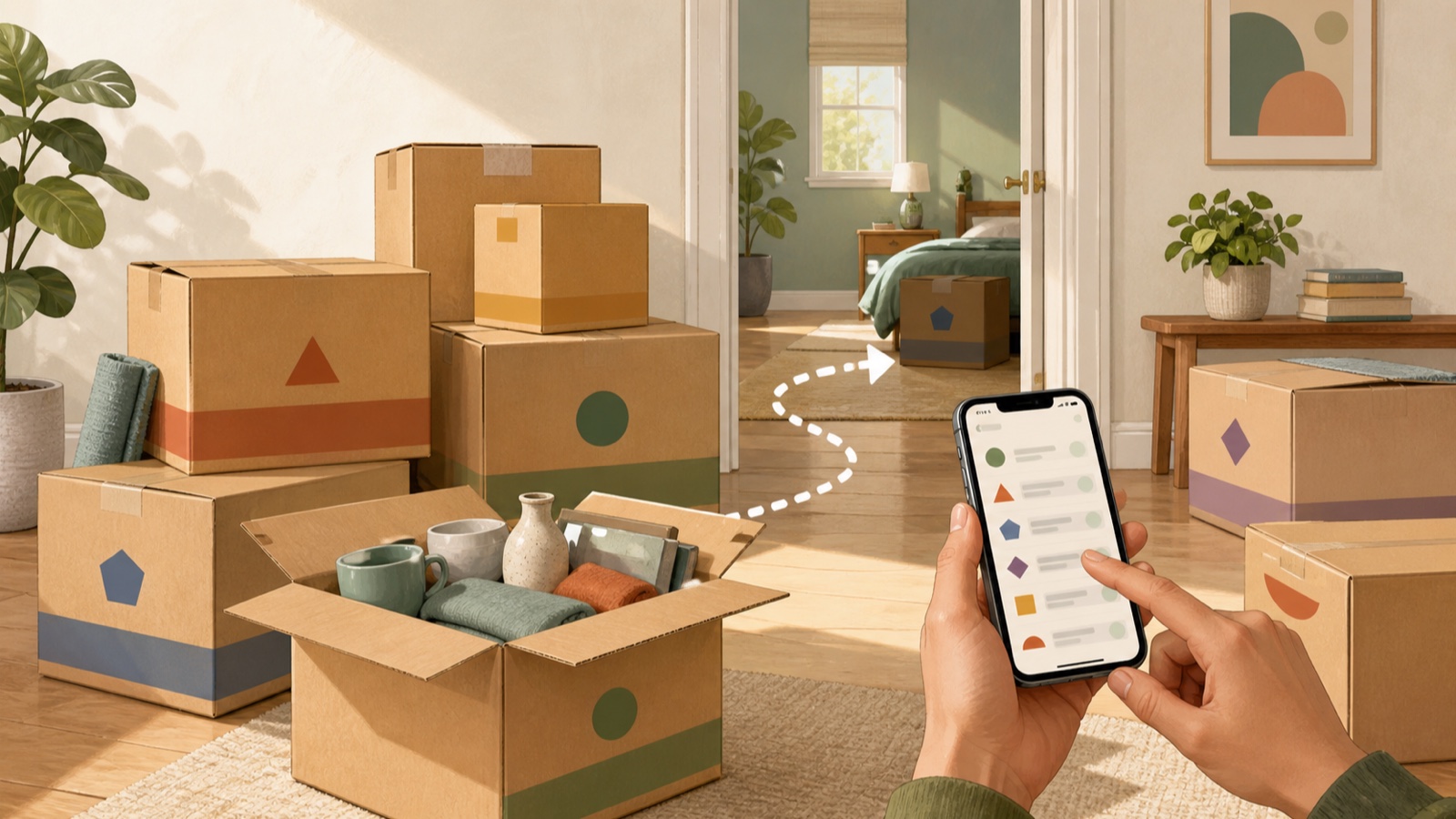
Context: why boxes become difficult to track
At the start of a move, it is easy to remember what went into each box. A few days later, the kitchen supplies are stacked beside bedroom linen, somebody has reused a label, and the charger you need tonight could be in any one of six cartons.
The problem is rarely a lack of effort. It is that a label such as “Kitchen” only describes a broad category. It does not tell you which kitchen, what is inside, whether the contents are fragile, or how urgently the box should be unpacked. When several people are packing, each person may also use a different naming system.
A useful box-tracking method therefore needs to answer four questions quickly:
- Which box is this?
- What is inside it?
- Where did it come from?
- Where should it go?
How to address the problem
Start by giving every box a unique identifier. A short number such as K-014 is easier to read and repeat than a long description. Put the identifier on more than one side so it remains visible when boxes are stacked.
Next, create a simple inventory as you pack. For each identifier, record:
- The room it is leaving.
- The room where it should be delivered.
- A short list of the most important contents.
- A handling note such as “fragile,” “keep upright,” or “open first.”
Describe the items you are likely to search for rather than documenting every teaspoon. “Coffee maker, mugs, filters, kettle” is more useful on moving morning than “kitchen appliances.” Photographing an open box before sealing it can provide a quick visual reminder when words are not enough.
Choose one place for the inventory and ask everyone helping with the move to use it. A consistent, shared record prevents a second list from drifting away from the labels on the boxes. Before the moving vehicle leaves, do a final count by room and note any identifiers that are missing.
At the new home, route boxes to their destination rooms before opening them. Then unpack the “open first” boxes and update your record as each carton is emptied. This turns unpacking into a visible queue instead of another search.
How Movaroo helps
Movaroo is built to keep this packing trail together in one moving project. Source and destination locations can be organised by room, while inventory records capture the box and the details that make it findable later.
QR-linked inventory gives each labelled box a direct connection to its record. Scanning the code can take you to the relevant inventory detail instead of asking everyone to interpret handwritten notes. Photos and tags add useful context for items that are fragile, important, or needed early, and searchable records help narrow down where an item was packed.
The practical benefit is continuity: the identifier attached during packing follows the box through loading, delivery, and unpacking. Everyone working from the same project can use the same destination and inventory information rather than maintaining separate versions of the move.
Conclusion
You do not need to catalogue every object to stop boxes from disappearing into the stack. Give each carton a unique identity, record the details you will actually search for, and use the same system from packing through unpacking.
Movaroo is being built to make that system easier to maintain with room-based inventory and QR-linked box records. Until launch, you can start with the method above and turn a collection of boxes into a move you can follow.